Runwayz helps young people find careers in the skilled trades, and helps the unions and trade associations who need them find those people first. CEO Devyn Maguire joined to lead Runwayz's next chapter, and we got to work alongside her and the team: first on the strategy, then on rebuilding the product and the brand around it.
Where Runwayz started
Runwayz started as a broad opportunity platform for young people. It was open to any kind of job (trades included), and it was sold to schools as a college and career readiness tool. It ran on Bubble, with native apps that schools had asked for.
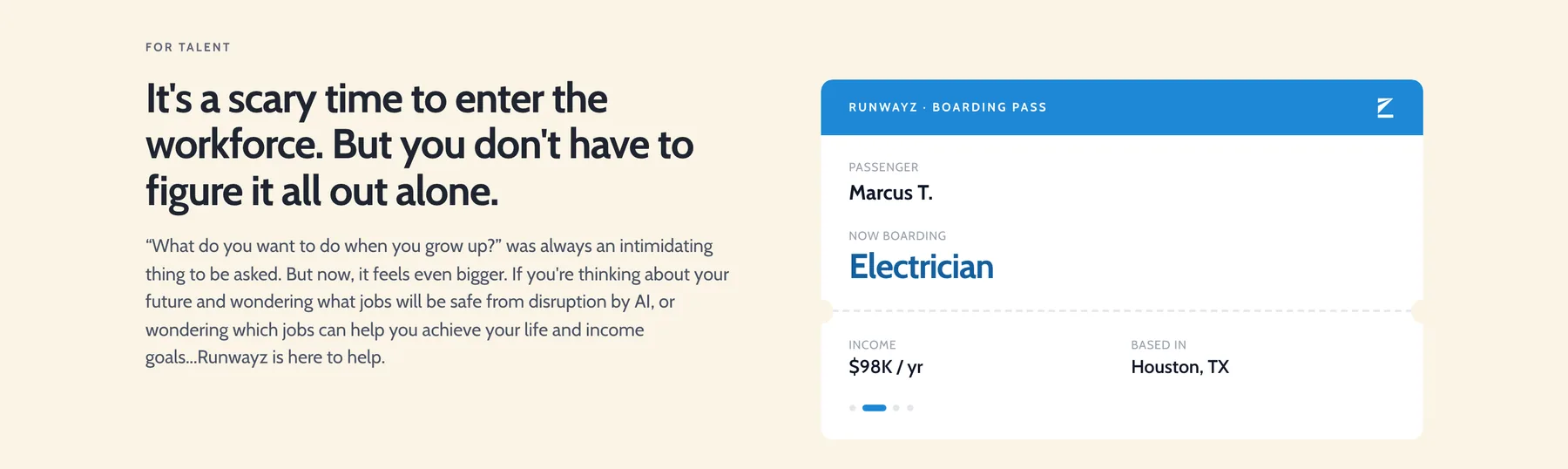
The problem it set out to solve for students is a real one, and it's only getting harder. As Runwayz tells them:
“It was always hard to answer the question, ‘What do you want to be when you grow up?’ Now, we know it's even harder.”
With AI changing work, a lot of young people are wondering whether the jobs they want will even be there in ten years (a fair question!).
Who was already paying
The strongest signal came from the sales pipeline. A union and a trade association had committed budget before the new platform was even built, on the promise of help recruiting members. That's a real pain point…and a buyer willing to pay to solve it.
It's easy to see why: only two new workers enter the skilled trades for every five who retire, as Runwayz's trade associations page points out.
And even when recruiting works, it's hard to prove. As Runwayz puts it to unions:
“Most unions cannot say what a new member costs to recruit, or where their best members came from.”
To put numbers on it, we wrote an exec memo for Devyn and the team that sized the market with unions and trade associations as the only buyers. It starts with what a new member is worth. As Runwayz's pitch to unions puts it, a union construction member pays an average of $1,381 a year in dues and fees, more than $40,000 over a 30-year career. A platform that can prove which members it brought in pays for itself. By our estimate, national construction and building trades alone are a market of more than $150M a year, and other national and regional unions and associations add $450M+ more, before counting any other kind of buyer.
The memo also found a gap. Union software and association management systems handle dues and records, but they don't help an organization find, nurture and convert new members, or measure what those members are worth. We pitched Runwayz as "HubSpot for membership organizations and workforce pipelines."
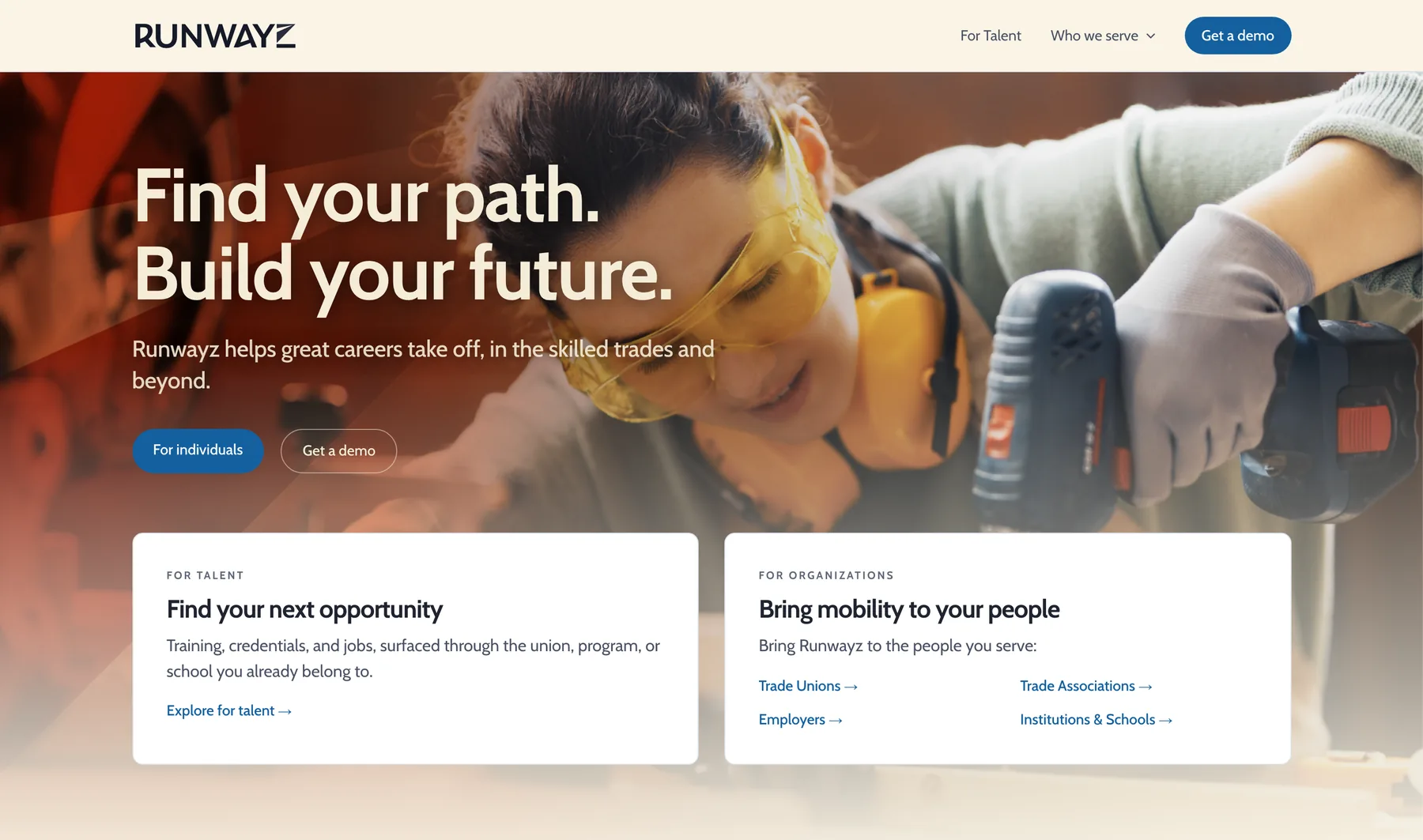
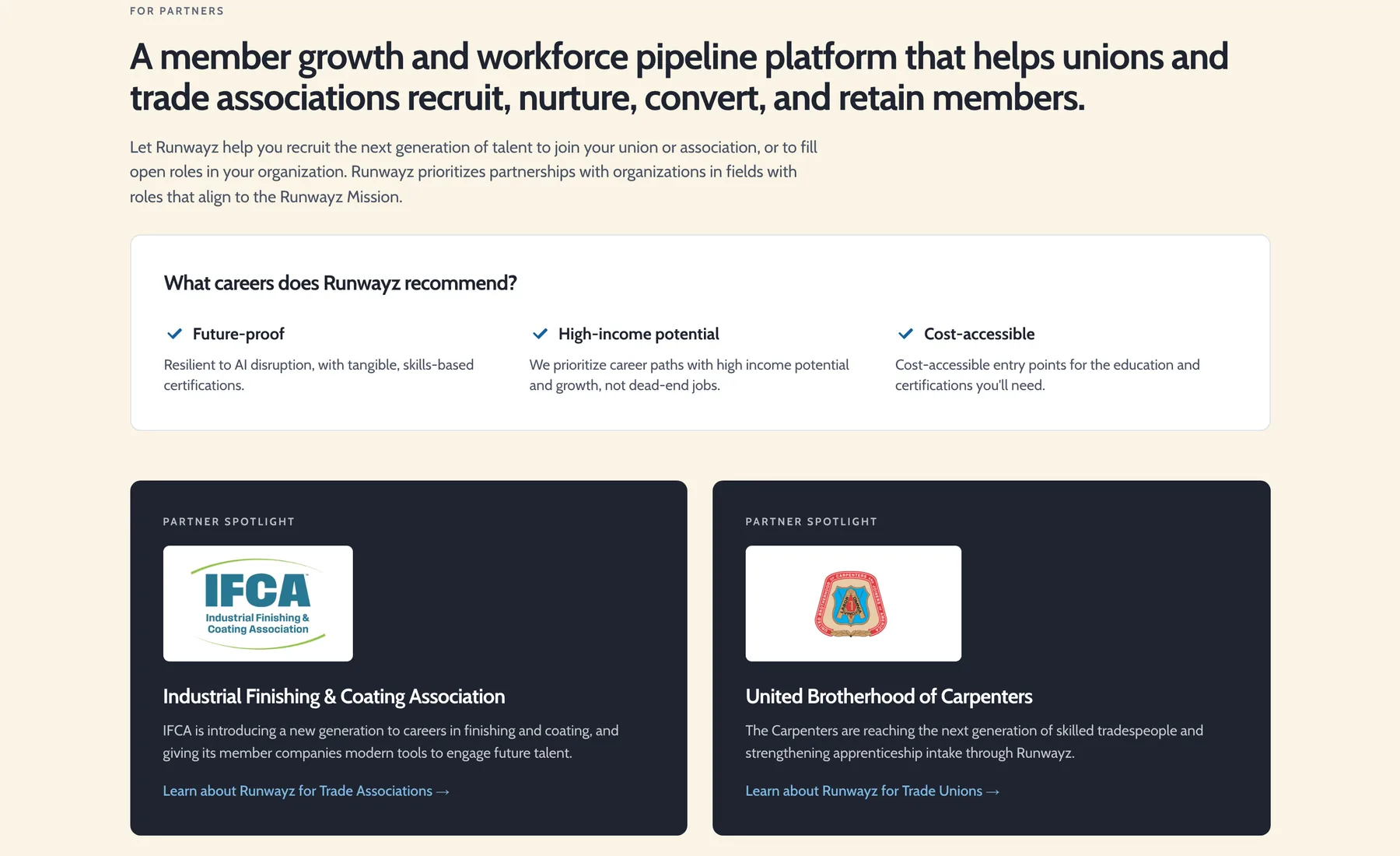
The positioning we developed together now leads the Runwayz homepage:
“A member growth and workforce pipeline platform that helps unions and trade associations recruit, nurture, convert, and retain members.”
A codebase Runwayz owns
The first version ran on Bubble, a no-code platform. That's a fast way to launch, but it meant the code lived on someone else's platform. With the buyer clear, it was time for a codebase Runwayz owns outright, and we rebuilt it from scratch: a web app and a marketing site.
We chose to focus on the web instead of building new native apps. One web product was quicker to ship, easier to maintain, and the fastest way to get real students onto the platform and deliver value to Runwayz's customers. Anyone can sign up today, as talent or as a member organization.
Students swipe through careers in the Career Matchmaker, see the gaps between themselves and a job, and apply to apprenticeships, jobs and union memberships. Unions and associations follow each person from Interested to Pursuing to Active. Every new member is attributed back to where they came from, so a union can prove how many members Runwayz helped it recruit (the ROI math from our memo, built into the product).
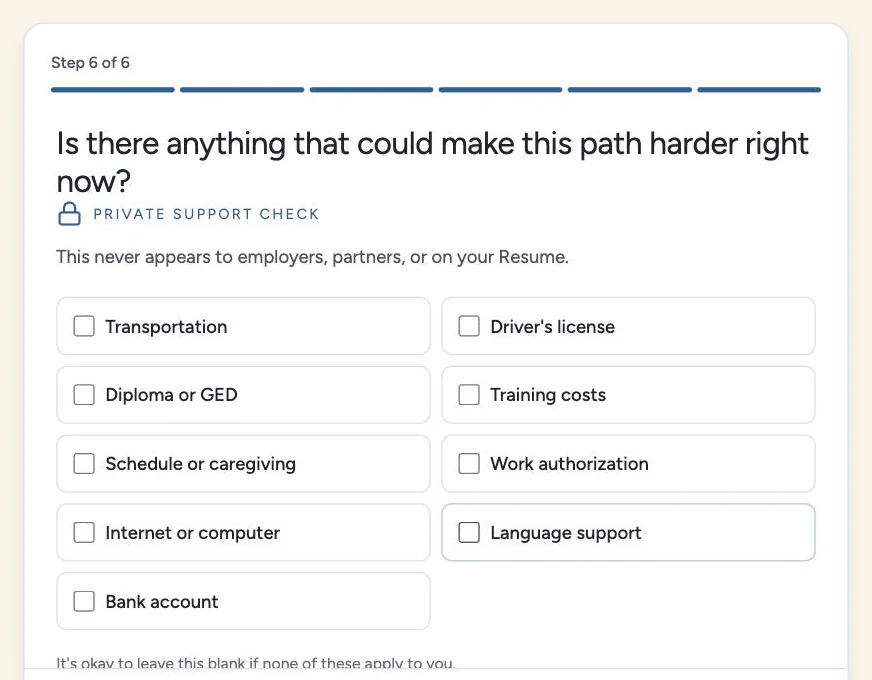
Onboarding also asks what could make a path harder right now, like transportation, a diploma or GED, training costs or work authorization. It's a private support check, and as the app tells students, it "never appears to employers, partners, or on your Resume."
The Carpenters and CCAI (now IFCA) are already using it to host events, post opportunities, and vet their pipeline of applicants.
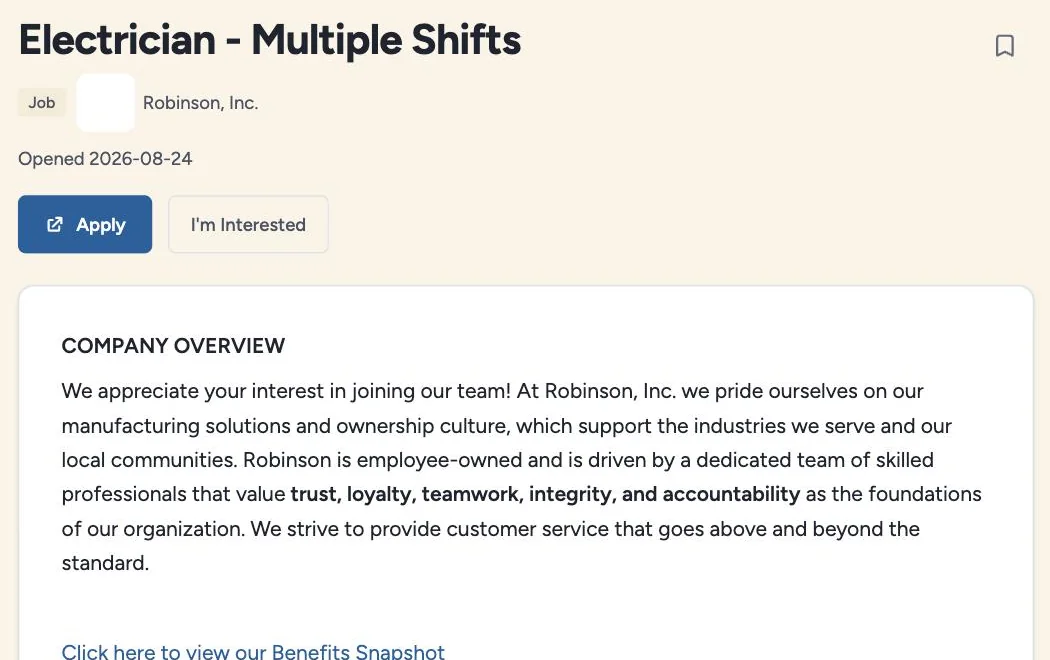
Organizing every job with O*NET
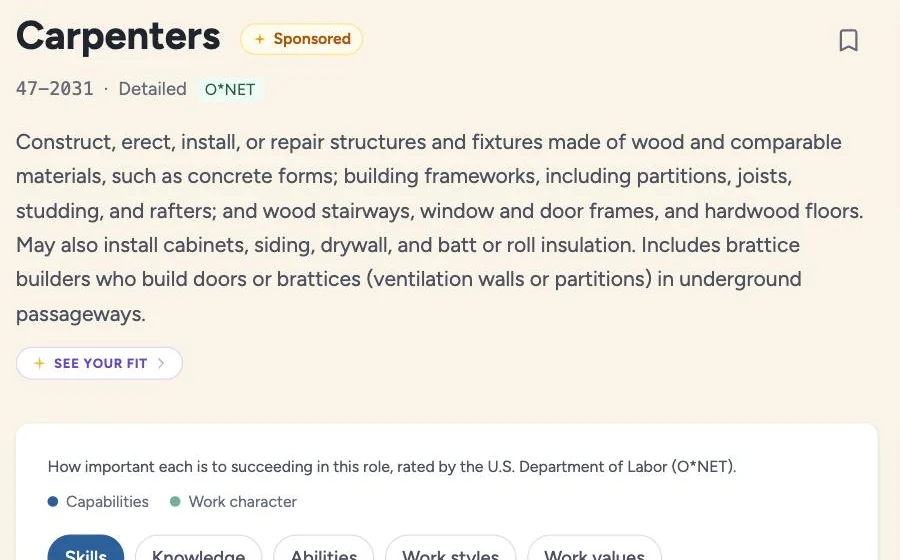
We needed a consistent way to organize every job on the platform, and found it in O*NET, the U.S. Department of Labor's occupational database. It sorts more than 1,000 occupations into a clean hierarchy, from 23 major groups down to individual occupations, and it's kept up to date.
That structure powers what Runwayz now calls its "O*NET-powered career explorer," built for students and job seekers who aren't sure yet whether the trades are right for them. Every opportunity on the platform is tagged back to an O*NET occupation, so jobs can be shown in a hierarchy and rolled up to their industry and field. The same tags feed Runwayz's internal analytics.
The brand
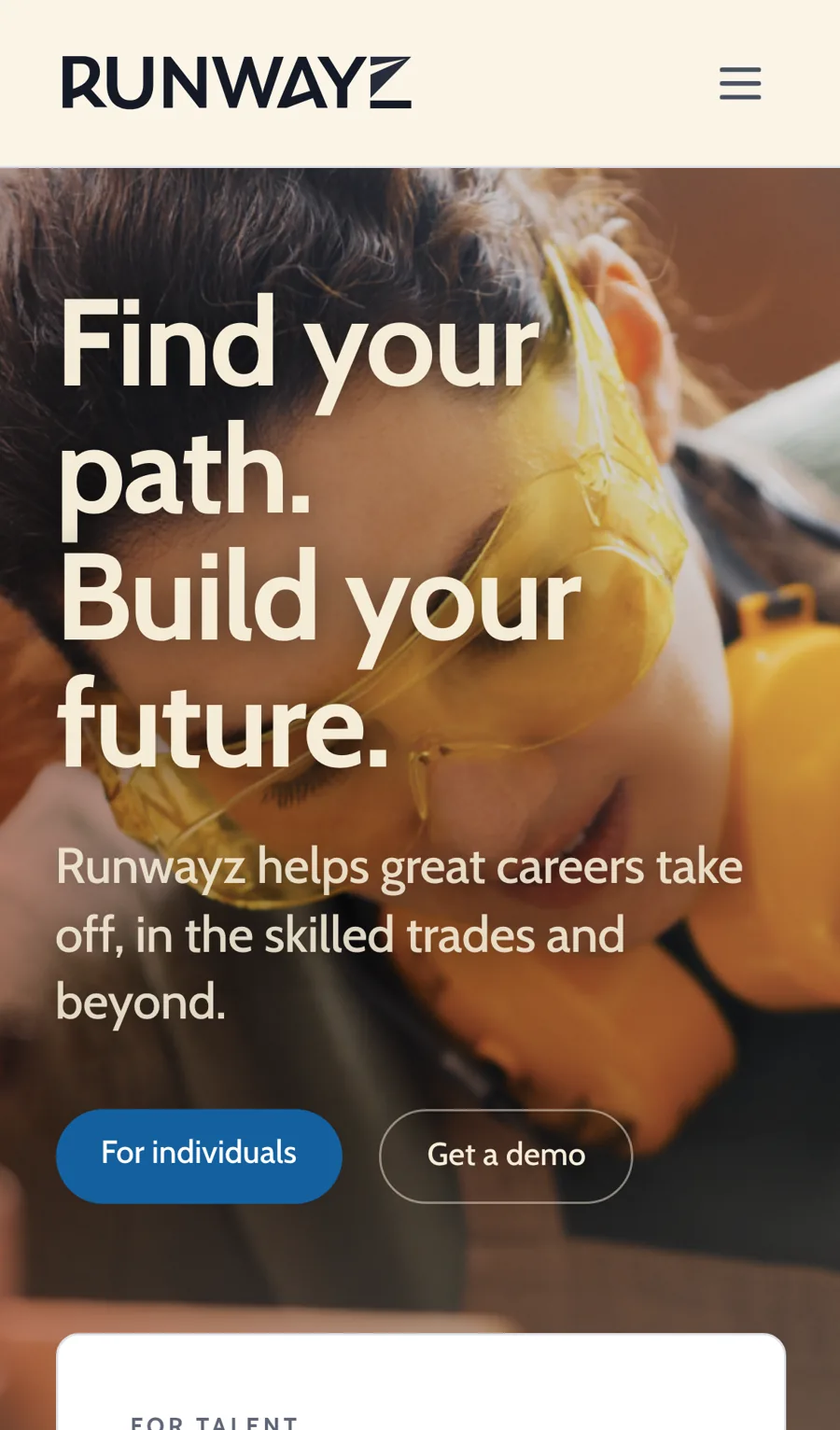
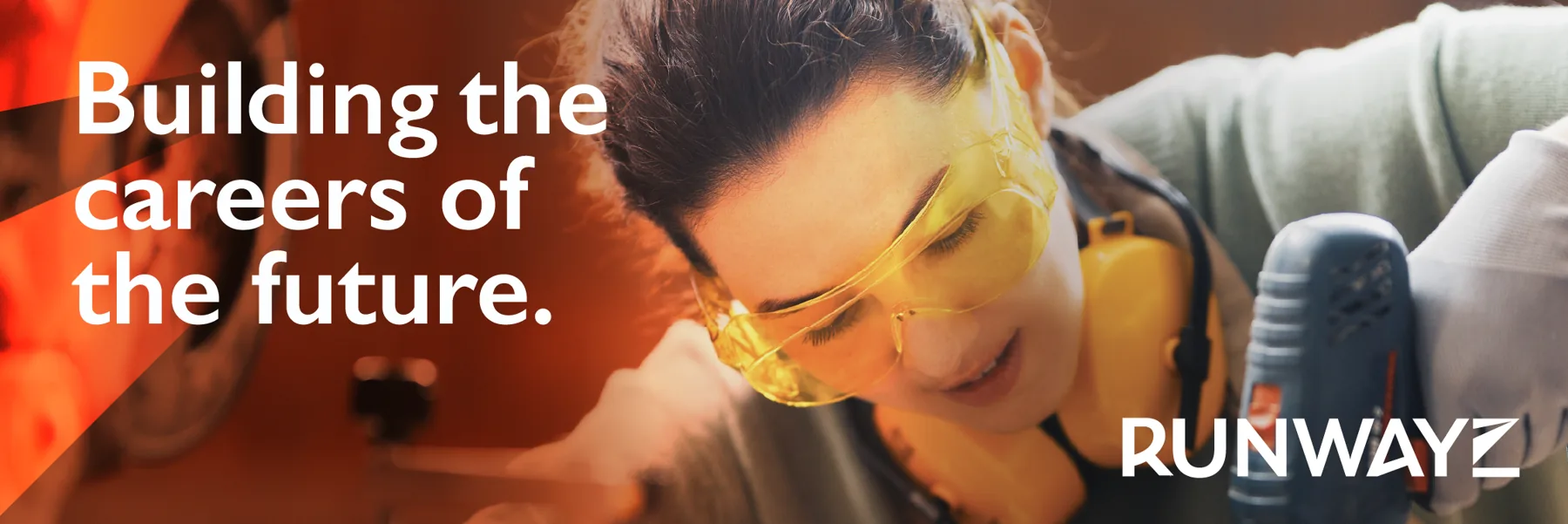
We wanted to build a bold brand that shows the trades as an exciting career path: modern, fresh, and inclusive across age, gender and race. Our brand brief put it more bluntly. Runwayz should "feel cool and make these career paths look counterculture, rebellious, and aspirational, not just feel like a corporate job board."
Young people are fighting for their futures right now: against AI, against the economy, and for the chance to earn a real livelihood. We wanted Runwayz's users to feel like pioneers, willing to break out of the mold. We summed it up in three words:
“Optimism is resistance.”
For inspiration, we looked to Art Deco travel posters from the 1920s and '30s, full of excitement for the future: bold flat colors, Art Deco type, and retro illustration, modernized. The brief also asked for a brand that reads at a glance on social media, and a mark with "flavor" in both the icon and the type. Any time a brand has an intentional alternative spelling, we like to use it in the mark, so the Z in Runwayz got a shape of its own.
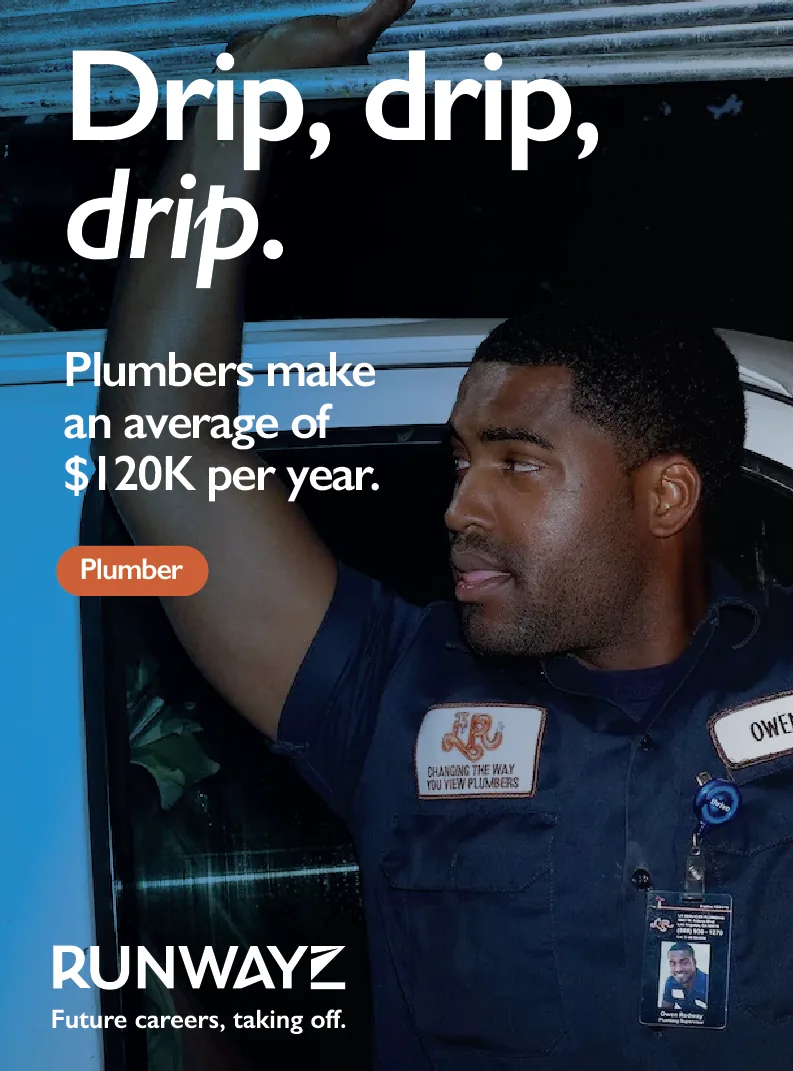
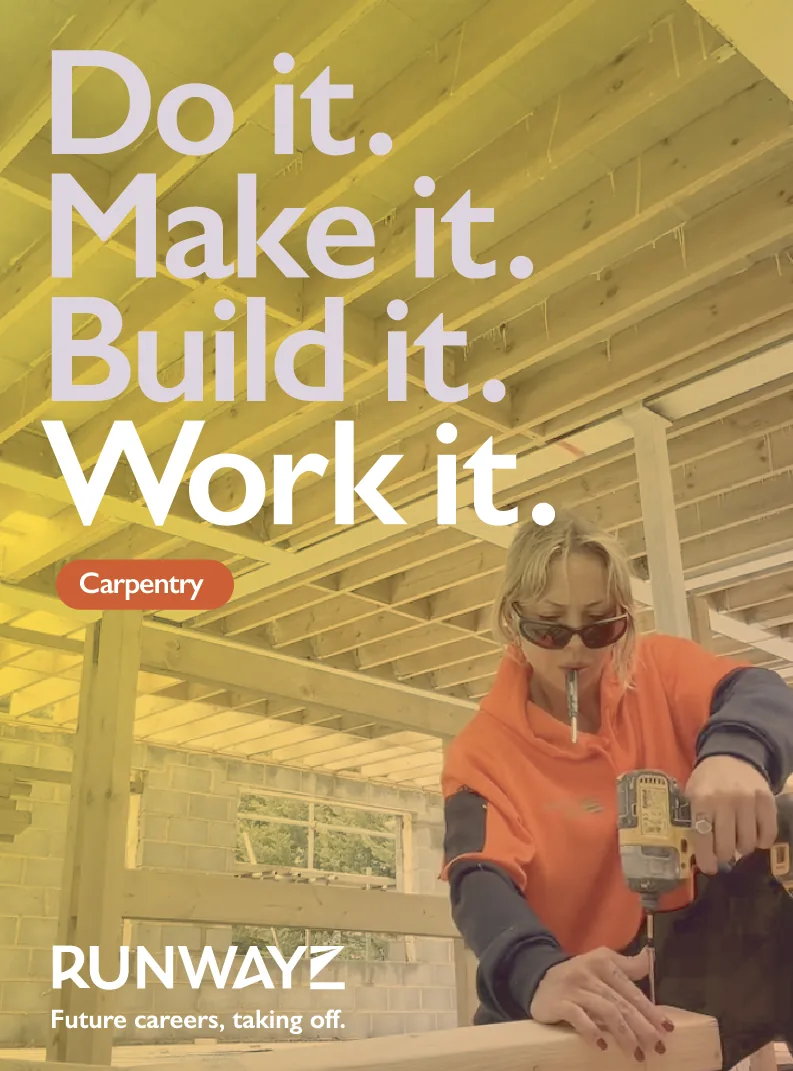
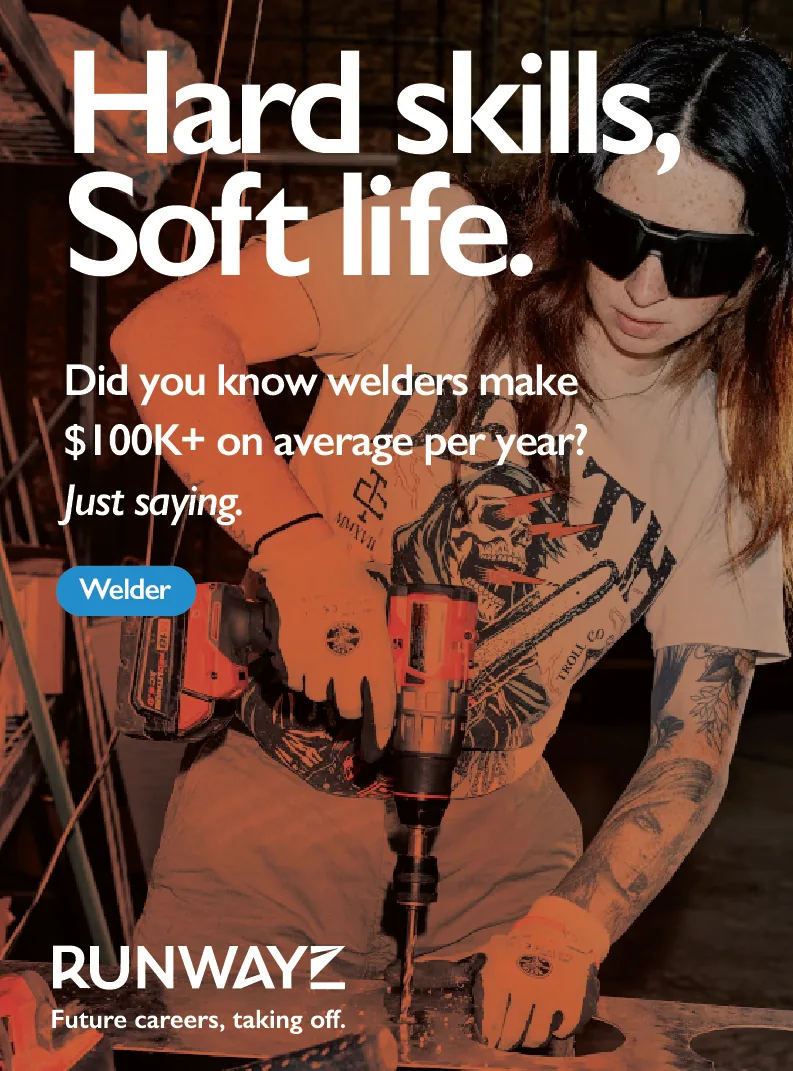
We created the logo and wrote the messaging. The posters show it best. Each one follows a simple formula from the style guide: a bold headline, real trade photography, and money-forward copy like "Plumbers make an average of $120K per year." The whole system is public as a living style guide on runwayz.com, built on the same design tokens as the product and site, and every color token passes WCAG AA in light and dark mode.
What changed
Under Devyn's leadership, Runwayz now runs on its own platform. Its first union and trade association customers, the United Brotherhood of Carpenters and CCAI (now IFCA), are on it today. On the Runwayz homepage, the Carpenters are "strengthening apprenticeship intake through Runwayz." Runwayz also launched its new brand, logo and messaging, and raised funding.